
GLP-1 Reconstitution Calculator Semaglutide, Tirzepatide & Retatrutide
How does the GLP-1 reconstitution calculator turn a vial size and target dose into BAC water and syringe units?
Semaglutide, tirzepatide, and retatrutide arrive as a fixed number of milligrams in a lyophilized vial. The reconstitution question is how much bacteriostatic (BAC) water to add so a weekly dose lands on a clean, easy-to-read syringe mark instead of an awkward number like 13 or 22 units.
The math runs in two steps. Concentration is the vial size in milligrams divided by the BAC water in milliliters. The draw volume is the target dose divided by that concentration, and on a U-100 syringe 1 mL is 100 units. A 10 mg semaglutide vial mixed with 2 mL of BAC water is 5 mg/mL, so a 1 mg dose draws 0.2 mL, or 20 units.
This calculator reverses the usual workflow. Instead of guessing a water volume first, it takes the fixed constraints (vial size and target dose) and solves the BAC water that puts the draw on a round number. Each compound carries its own vial sizes and dose rungs, from sub-milligram microdoses to the top labeled steps, and the per-vial charts below give the BAC water, concentration, and exact unit draw for each.
How to Reconstitute a GLP-1
Semaglutide, tirzepatide, and retatrutide ship as lyophilized powder: a fixed number of milligrams sealed dry in the vial. Reconstitution adds bacteriostatic (BAC) water so a weekly dose can be drawn accurately. The milligrams in the vial never change. BAC water only sets concentration and draw volume: more water makes the solution more dilute and the draw larger; less water makes it more concentrated and the draw smaller.
Three formulas turn a vial and a target dose into a syringe mark:
Concentration (mg/mL) = vial size (mg) / BAC water added (mL)
Draw volume (mL) = target dose (mg) / concentration (mg/mL)
U-100 units = draw volume (mL) x 100
The procedure is the same for all three compounds:
- Sanitize. Wipe the rubber stopper of the peptide vial and the BAC water vial with a fresh alcohol swab. Let them dry and do not touch them afterward.
- Draw the BAC water. Draw air equal to the planned water volume, invert the BAC vial, inject the air to equalize pressure, then draw out the calculated volume.
- Add it slowly. Angle the needle against the inside glass wall of the peptide vial and let the water run down the side, never onto the powder and never forced. A hard stream foams the solution and blocks an accurate draw.
- Swirl to dissolve. Roll or swirl the vial until the solution is clear and colorless. Do not shake. If it stays cloudy or holds particles, do not use it.
- Store. Refrigerate at 36-46°F (2-8°C), use within 4-6 weeks, and never freeze, since ice crystals disrupt the peptide. Discard if it turns cloudy, discolored, or particulate.
Vial-based GLP-1 dosing is not automatically legal, available, or clinically appropriate just because the math is possible. Verify source, sterility, concentration, and the current rules before any vial is used.
The worked examples and per-compound charts below give the BAC water, concentration, and exact unit draw for each common vial.
How to Reconstitute Peptides: A Step-by-Step Visual Guide
Six steps, start to finish. Swipe or use the arrows — first time or hundredth.
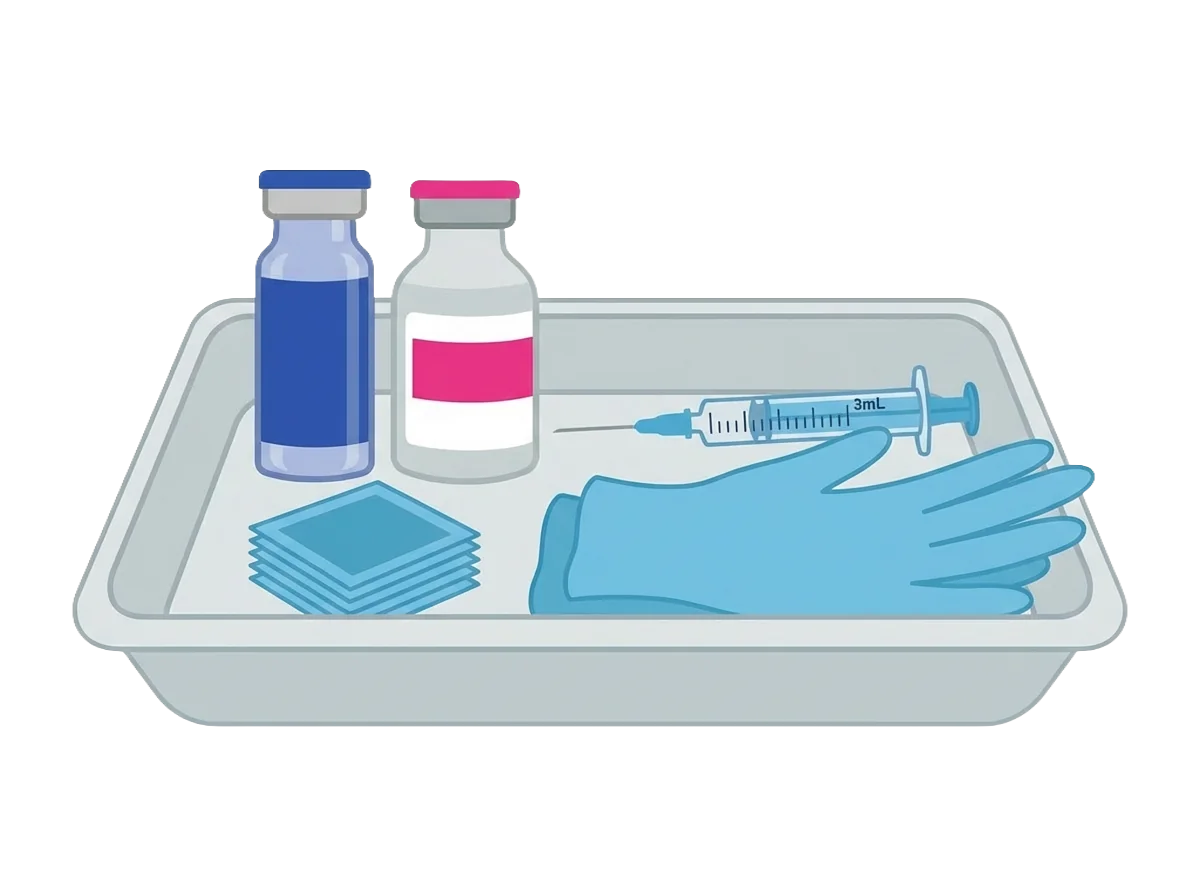
Gather Your Supplies
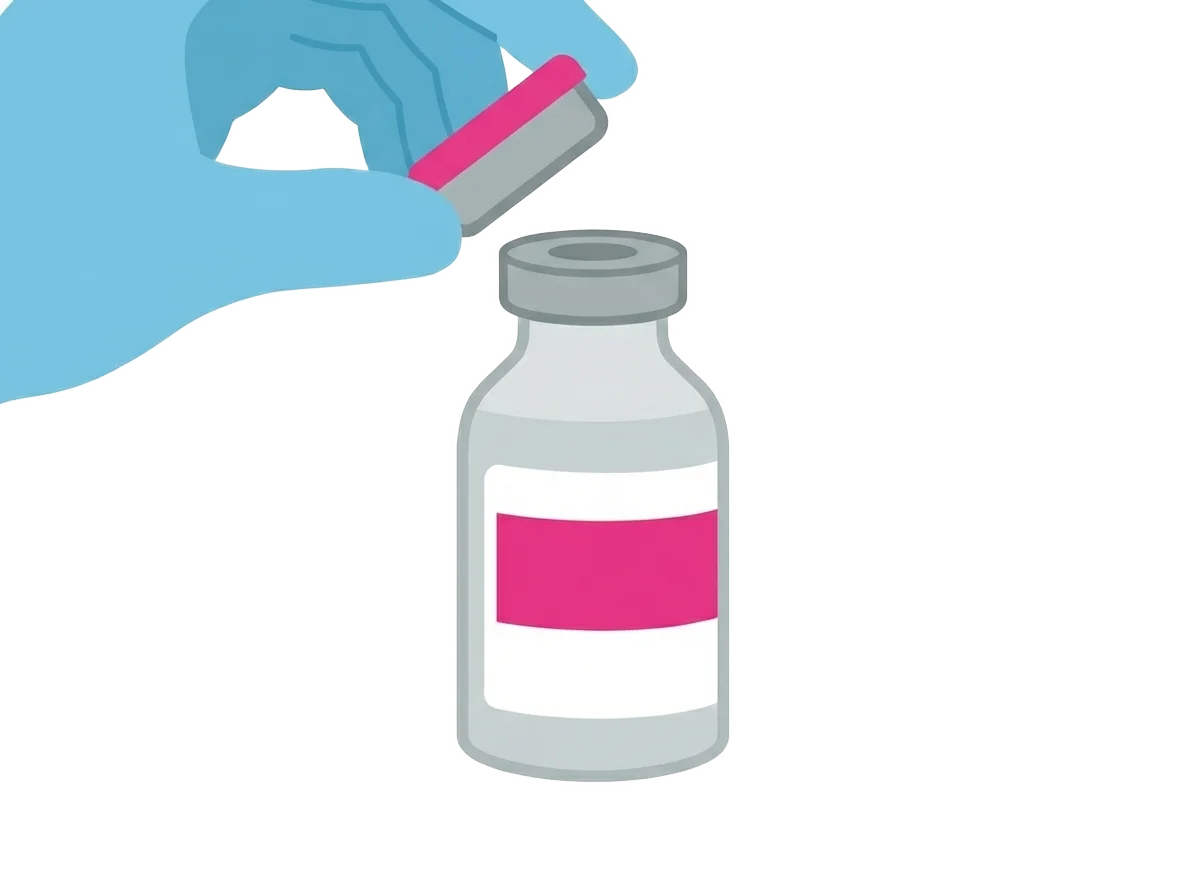
Prepare
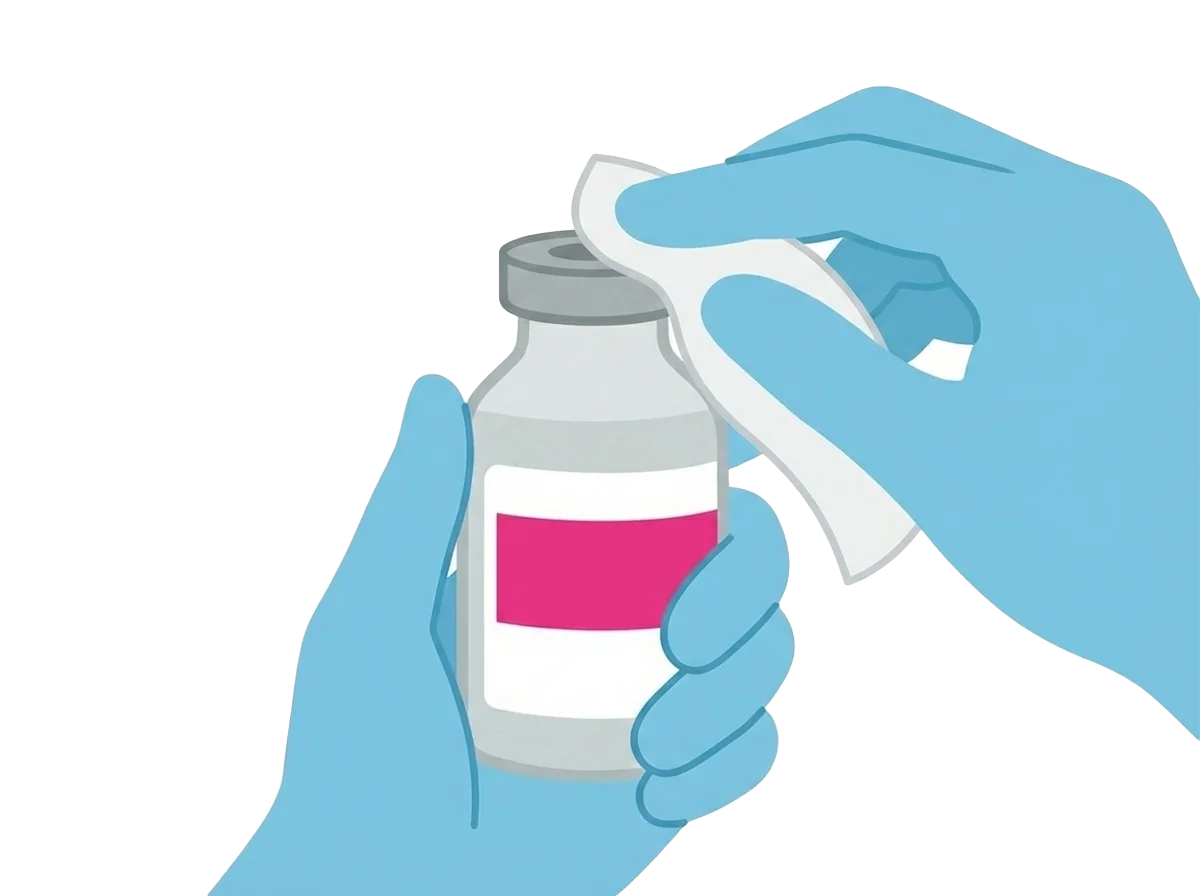
Sanitize
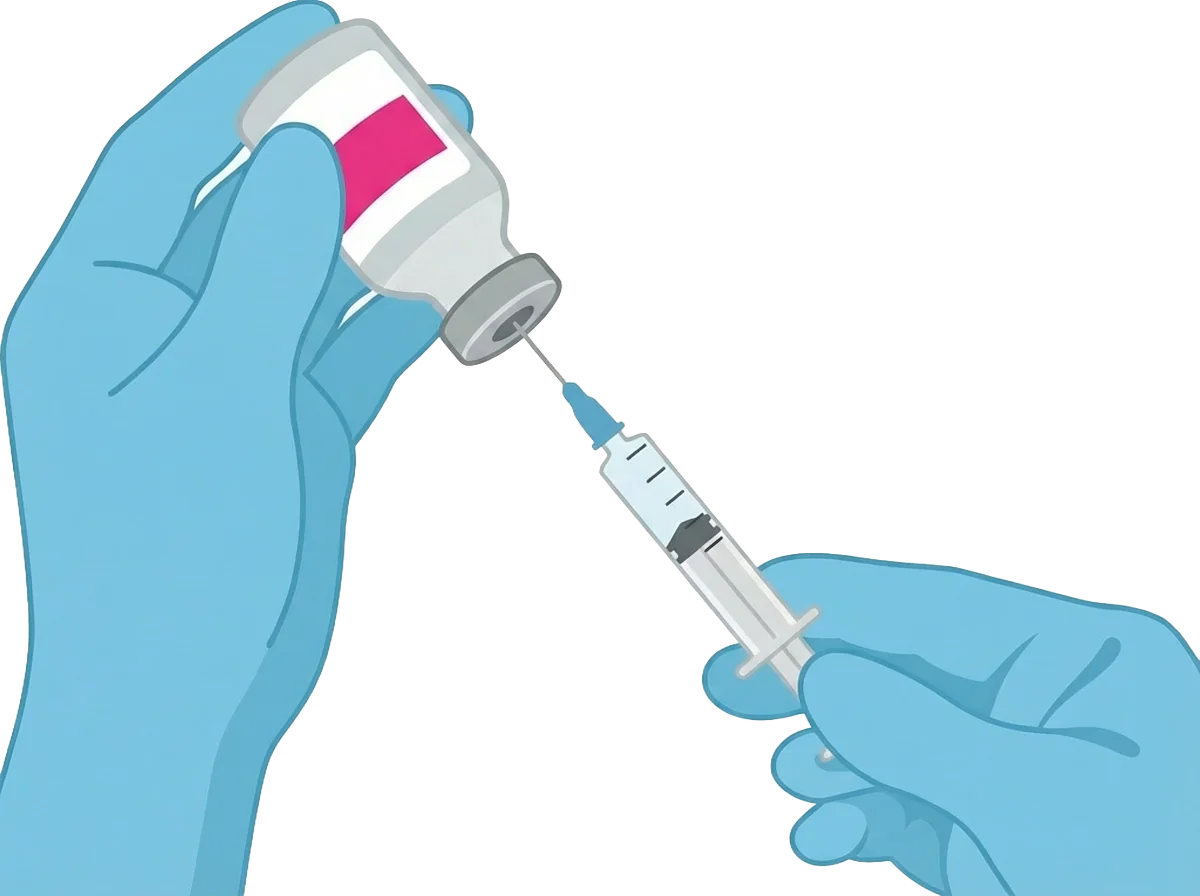
Draw BAC Water
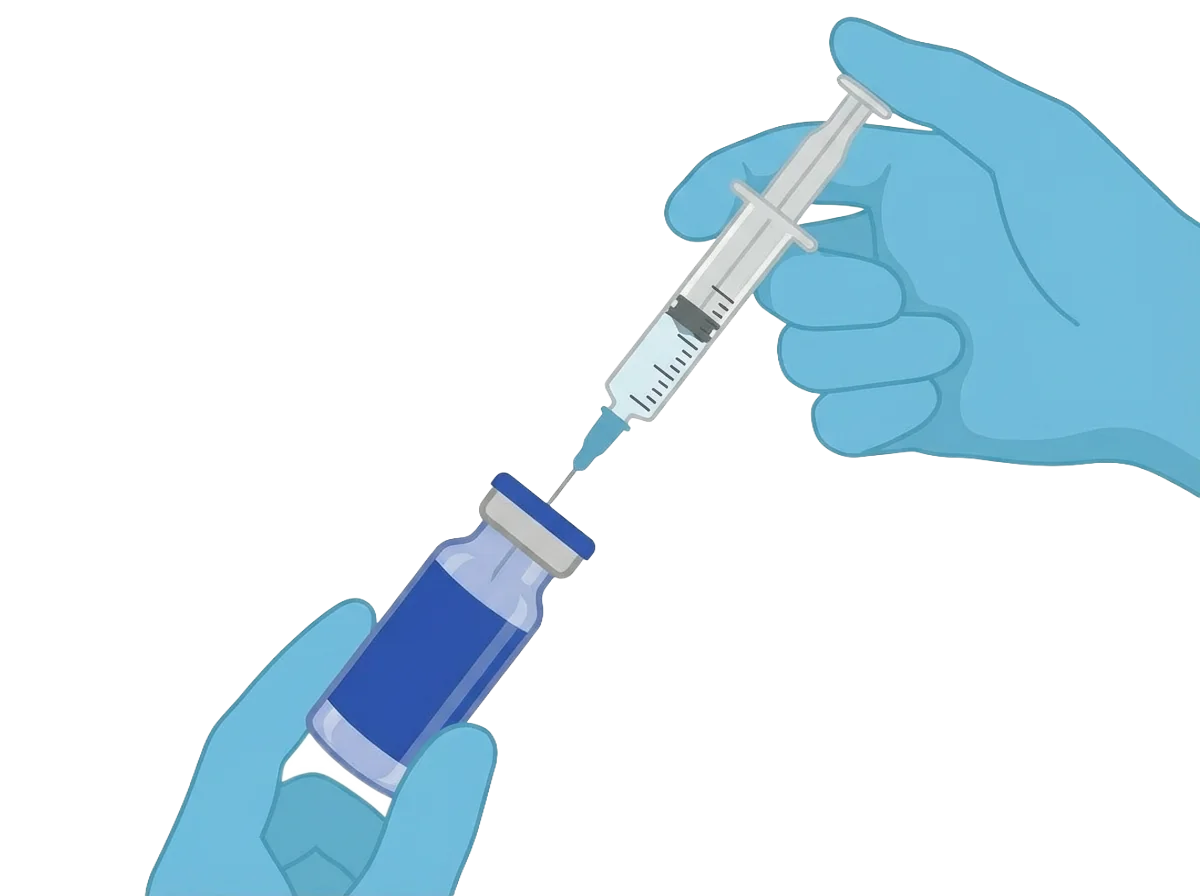
Reconstitute the Peptide
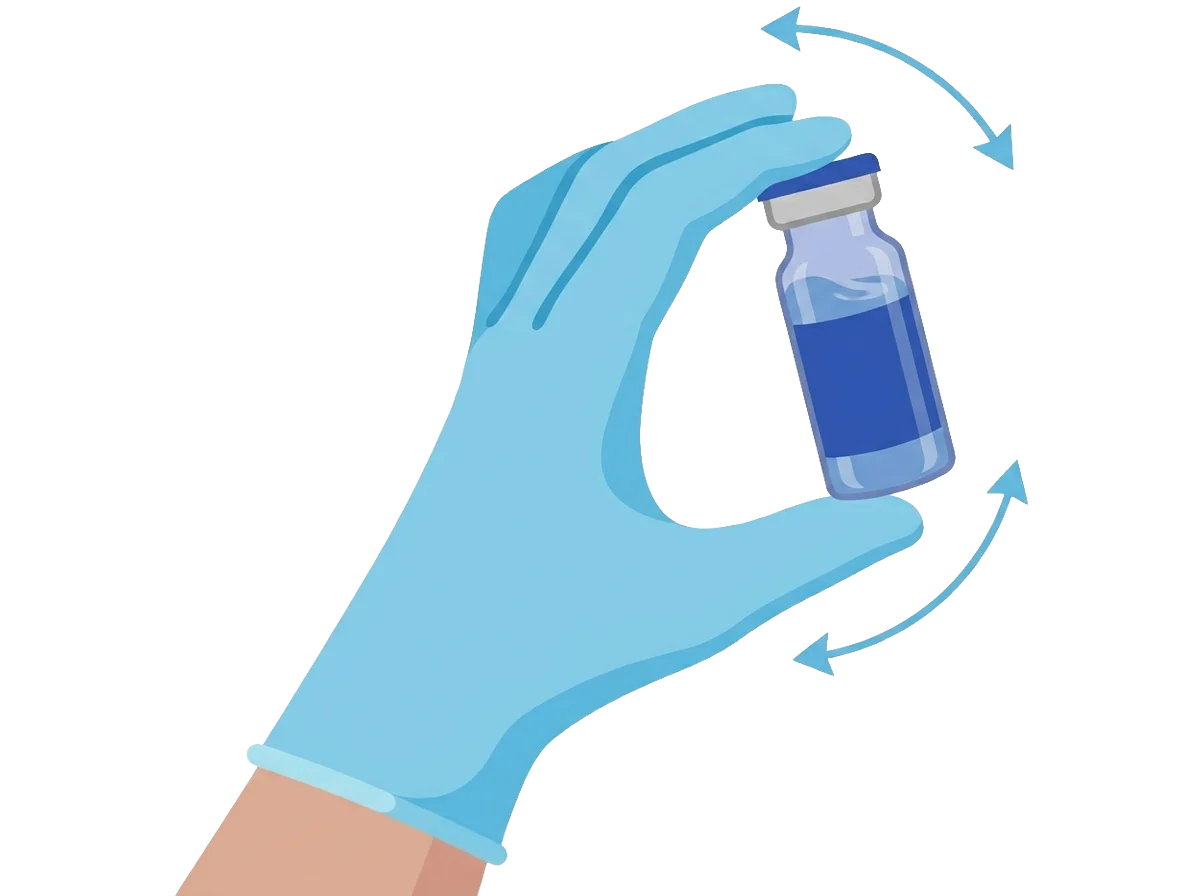
Gently Swirl to Dissolve
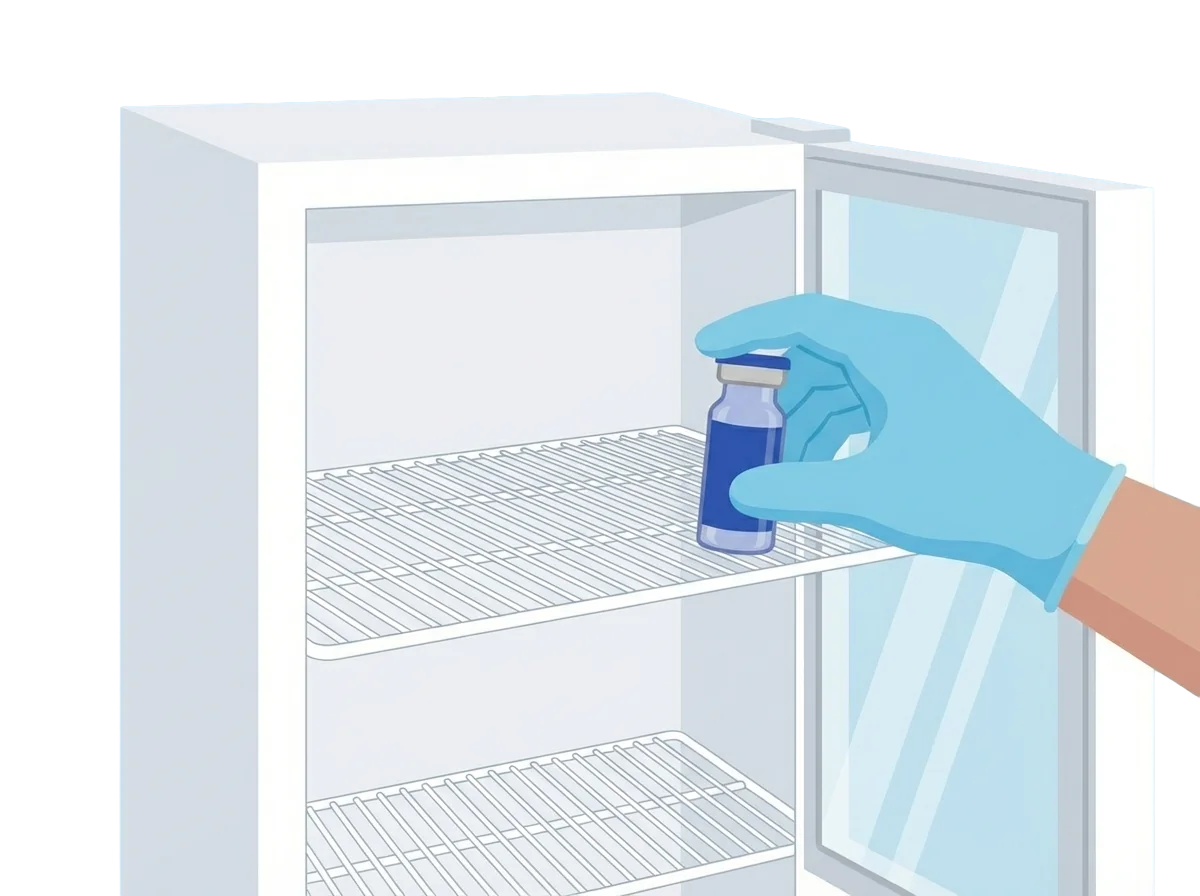
Store Properly
Worked Examples
Retatrutide
Retatrutide arrives as research-grade lyophilized powder, usually in 5-30 mg vials. Take a 10 mg vial with 1 mL of bacteriostatic water:
- Concentration: 10 mg / 1 mL = 10 mg/mL
- Target dose 2 mg: 2 mg / 10 mg/mL = 0.2 mL = 20 units
At 10 mg/mL the measured rungs read straight off a U-100 syringe: 0.5 mg is 5 units, 1 mg is 10 units, 4 mg is 40 units. The retatrutide chart below tunes the water per dose so smaller and larger targets also land on round marks.
Tirzepatide
Tirzepatide is sold in 10-60 mg vials. Take a 30 mg vial with 2 mL of bacteriostatic water:
- Concentration: 30 mg / 2 mL = 15 mg/mL
- Target dose 7.5 mg: 7.5 mg / 15 mg/mL = 0.5 mL = 50 units
The label ladder (2.5, 5, 7.5, 10, 12.5, 15 mg) all draws cleanly at 15 mg/mL. A smaller vial or a lower maintenance dose wants a different fill, which the tirzepatide chart below lists for each vial and rung.
Semaglutide
Vial-based semaglutide replaces the fixed-dose Ozempic and Wegovy pens; common vials are 2.5, 5, and 10 mg. Take a 10 mg vial with 2 mL of bacteriostatic water:
- Concentration: 10 mg / 2 mL = 5 mg/mL
- Target dose 1 mg: 1 mg / 5 mg/mL = 0.2 mL = 20 units
At 5 mg/mL the 0.25 mg start is 5 units and the 2.4 mg top dose is 48 units. The semaglutide chart below gives the fill for each vial across the 0.25-2.4 mg range.
Retatrutide Reconstitution Chart
Each row is a standalone recipe: pick the dose to run, fill the vial with that row's BAC water, and the draw lands on the listed U-100 syringe mark. Common retatrutide vials run 5-30 mg.
5 mg vial
| Dose | BAC Water | Concentration | Syringe Draw |
|---|---|---|---|
| 0.5 mg | 3 mL | 1.67 mg/mL | 0.3 mL / 30 units |
| 1 mg | 2.5 mL | 2 mg/mL | 0.5 mL / 50 units |
| 2 mg | 2.5 mL | 2 mg/mL | 1 mL / 100 units |
| 4 mg | 1 mL | 5 mg/mL | 0.8 mL / 80 units |
10 mg vial
| Dose | BAC Water | Concentration | Syringe Draw |
|---|---|---|---|
| 0.5 mg | 3 mL | 3.33 mg/mL | 0.15 mL / 15 units |
| 1 mg | 3 mL | 3.33 mg/mL | 0.3 mL / 30 units |
| 2 mg | 2.5 mL | 4 mg/mL | 0.5 mL / 50 units |
| 4 mg | 2.5 mL | 4 mg/mL | 1 mL / 100 units |
| 6 mg | 1 mL | 10 mg/mL | 0.6 mL / 60 units |
| 8 mg | 1 mL | 10 mg/mL | 0.8 mL / 80 units |
12 mg vial
| Dose | BAC Water | Concentration | Syringe Draw |
|---|---|---|---|
| 0.5 mg | 2.4 mL | 5 mg/mL | 0.1 mL / 10 units |
| 1 mg | 3 mL | 4 mg/mL | 0.25 mL / 25 units |
| 2 mg | 3 mL | 4 mg/mL | 0.5 mL / 50 units |
| 4 mg | 3 mL | 4 mg/mL | 1 mL / 100 units |
| 6 mg | 1 mL | 12 mg/mL | 0.5 mL / 50 units |
| 8 mg | 1.2 mL | 10 mg/mL | 0.8 mL / 80 units |
15 mg vial
| Dose | BAC Water | Concentration | Syringe Draw |
|---|---|---|---|
| 1 mg | 3 mL | 5 mg/mL | 0.2 mL / 20 units |
| 2 mg | 2.3 mL | 6.52 mg/mL | 0.3 mL / 30 units |
| 4 mg | 3 mL | 5 mg/mL | 0.8 mL / 80 units |
| 6 mg | 2.5 mL | 6 mg/mL | 1 mL / 100 units |
| 8 mg | 1.3 mL | 11.54 mg/mL | 0.7 mL / 70 units |
20 mg vial
| Dose | BAC Water | Concentration | Syringe Draw |
|---|---|---|---|
| 1 mg | 3 mL | 6.67 mg/mL | 0.15 mL / 15 units |
| 2 mg | 3 mL | 6.67 mg/mL | 0.3 mL / 30 units |
| 4 mg | 2.5 mL | 8 mg/mL | 0.5 mL / 50 units |
| 6 mg | 3 mL | 6.67 mg/mL | 0.9 mL / 90 units |
| 8 mg | 2.5 mL | 8 mg/mL | 1 mL / 100 units |
| 9 mg | 2 mL | 10 mg/mL | 0.9 mL / 90 units |
| 10 mg | 2 mL | 10 mg/mL | 1 mL / 100 units |
| 12 mg | 1.5 mL | 13.33 mg/mL | 0.9 mL / 90 units |
24 mg vial
| Dose | BAC Water | Concentration | Syringe Draw |
|---|---|---|---|
| 1 mg | 2.4 mL | 10 mg/mL | 0.1 mL / 10 units |
| 2 mg | 3 mL | 8 mg/mL | 0.25 mL / 25 units |
| 4 mg | 3 mL | 8 mg/mL | 0.5 mL / 50 units |
| 6 mg | 3 mL | 8 mg/mL | 0.75 mL / 75 units |
| 8 mg | 3 mL | 8 mg/mL | 1 mL / 100 units |
| 9 mg | 2 mL | 12 mg/mL | 0.75 mL / 75 units |
| 10 mg | 2.4 mL | 10 mg/mL | 1 mL / 100 units |
| 12 mg | 2 mL | 12 mg/mL | 1 mL / 100 units |
30 mg vial
| Dose | BAC Water | Concentration | Syringe Draw |
|---|---|---|---|
| 2 mg | 3 mL | 10 mg/mL | 0.2 mL / 20 units |
| 4 mg | 2.3 mL | 13.04 mg/mL | 0.3 mL / 30 units |
| 6 mg | 2.5 mL | 12 mg/mL | 0.5 mL / 50 units |
| 8 mg | 3 mL | 10 mg/mL | 0.8 mL / 80 units |
| 9 mg | 3 mL | 10 mg/mL | 0.9 mL / 90 units |
| 10 mg | 3 mL | 10 mg/mL | 1 mL / 100 units |
| 12 mg | 2 mL | 15 mg/mL | 0.8 mL / 80 units |
Tirzepatide Reconstitution Chart
Each row is a standalone recipe: pick the dose to run, fill the vial with that row's BAC water, and the draw lands on the listed U-100 syringe mark. Common tirzepatide vials run 10-60 mg.
10 mg vial
| Dose | BAC Water | Concentration | Syringe Draw |
|---|---|---|---|
| 1 mg | 3 mL | 3.33 mg/mL | 0.3 mL / 30 units |
| 2 mg | 2.5 mL | 4 mg/mL | 0.5 mL / 50 units |
| 2.5 mg | 3 mL | 3.33 mg/mL | 0.75 mL / 75 units |
| 5 mg | 1 mL | 10 mg/mL | 0.5 mL / 50 units |
| 7.5 mg | 1 mL | 10 mg/mL | 0.75 mL / 75 units |
| 10 mg | 1 mL | 10 mg/mL | 1 mL / 100 units |
15 mg vial
| Dose | BAC Water | Concentration | Syringe Draw |
|---|---|---|---|
| 1 mg | 3 mL | 5 mg/mL | 0.2 mL / 20 units |
| 2 mg | 2.3 mL | 6.52 mg/mL | 0.3 mL / 30 units |
| 2.5 mg | 3 mL | 5 mg/mL | 0.5 mL / 50 units |
| 5 mg | 3 mL | 5 mg/mL | 1 mL / 100 units |
| 7.5 mg | 1 mL | 15 mg/mL | 0.5 mL / 50 units |
| 10 mg | 1.2 mL | 12.5 mg/mL | 0.8 mL / 80 units |
| 12.5 mg | 1.2 mL | 12.5 mg/mL | 1 mL / 100 units |
| 15 mg | 1 mL | 15 mg/mL | 1 mL / 100 units |
20 mg vial
| Dose | BAC Water | Concentration | Syringe Draw |
|---|---|---|---|
| 1 mg | 3 mL | 6.67 mg/mL | 0.15 mL / 15 units |
| 2 mg | 3 mL | 6.67 mg/mL | 0.3 mL / 30 units |
| 2.5 mg | 2.4 mL | 8.33 mg/mL | 0.3 mL / 30 units |
| 5 mg | 3 mL | 6.67 mg/mL | 0.75 mL / 75 units |
| 7.5 mg | 2.4 mL | 8.33 mg/mL | 0.9 mL / 90 units |
| 10 mg | 1 mL | 20 mg/mL | 0.5 mL / 50 units |
| 12.5 mg | 1.2 mL | 16.67 mg/mL | 0.75 mL / 75 units |
| 15 mg | 1 mL | 20 mg/mL | 0.75 mL / 75 units |
30 mg vial
| Dose | BAC Water | Concentration | Syringe Draw |
|---|---|---|---|
| 2 mg | 3 mL | 10 mg/mL | 0.2 mL / 20 units |
| 2.5 mg | 3 mL | 10 mg/mL | 0.25 mL / 25 units |
| 5 mg | 3 mL | 10 mg/mL | 0.5 mL / 50 units |
| 7.5 mg | 3 mL | 10 mg/mL | 0.75 mL / 75 units |
| 10 mg | 3 mL | 10 mg/mL | 1 mL / 100 units |
| 12.5 mg | 2.4 mL | 12.5 mg/mL | 1 mL / 100 units |
| 15 mg | 1 mL | 30 mg/mL | 0.5 mL / 50 units |
60 mg vial
| Dose | BAC Water | Concentration | Syringe Draw |
|---|---|---|---|
| 2.5 mg | 2.4 mL | 25 mg/mL | 0.1 mL / 10 units |
| 5 mg | 3 mL | 20 mg/mL | 0.25 mL / 25 units |
| 7.5 mg | 2.4 mL | 25 mg/mL | 0.3 mL / 30 units |
| 10 mg | 3 mL | 20 mg/mL | 0.5 mL / 50 units |
| 12.5 mg | 2.4 mL | 25 mg/mL | 0.5 mL / 50 units |
| 15 mg | 3 mL | 20 mg/mL | 0.75 mL / 75 units |
Semaglutide Reconstitution Chart
Each row is a standalone recipe: pick the dose to run, fill the vial with that row's BAC water, and the draw lands on the listed U-100 syringe mark. Common semaglutide vials run 2.5-10 mg.
2.5 mg vial
| Dose | BAC Water | Concentration | Syringe Draw |
|---|---|---|---|
| 0.5 mg | 2.5 mL | 1 mg/mL | 0.5 mL / 50 units |
| 1 mg | 2.5 mL | 1 mg/mL | 1 mL / 100 units |
| 1.7 mg | 1.1 mL | 2.27 mg/mL | 0.75 mL / 75 units |
5 mg vial
| Dose | BAC Water | Concentration | Syringe Draw |
|---|---|---|---|
| 0.5 mg | 3 mL | 1.67 mg/mL | 0.3 mL / 30 units |
| 1 mg | 2.5 mL | 2 mg/mL | 0.5 mL / 50 units |
| 1.7 mg | 2.2 mL | 2.27 mg/mL | 0.75 mL / 75 units |
| 2.4 mg | 2.1 mL | 2.38 mg/mL | 1 mL / 100 units |
10 mg vial
| Dose | BAC Water | Concentration | Syringe Draw |
|---|---|---|---|
| 0.5 mg | 3 mL | 3.33 mg/mL | 0.15 mL / 15 units |
| 1 mg | 3 mL | 3.33 mg/mL | 0.3 mL / 30 units |
| 1.7 mg | 2.9 mL | 3.45 mg/mL | 0.5 mL / 50 units |
| 2.4 mg | 2.1 mL | 4.76 mg/mL | 0.5 mL / 50 units |
GLP-1 Reconstitution
How do I calculate a GLP-1 dose in syringe units?
Divide the vial size in milligrams by the BAC water in milliliters to get concentration, then divide the target dose by that concentration to get the draw in milliliters. On a U-100 syringe, multiply milliliters by 100 for units. A 10 mg vial with 2 mL of BAC water is 5 mg/mL, so a 1 mg dose draws 0.2 mL, or 20 units.
Does BAC water volume change how strong a GLP-1 is?
No. The vial holds a fixed number of milligrams. BAC water only changes concentration and draw volume: a more dilute vial needs a larger draw for the same dose, a more concentrated vial a smaller one. The drug delivered is identical.
How long does a reconstituted GLP-1 last?
Once mixed and refrigerated at 36-46°F (2-8°C), semaglutide, tirzepatide, and retatrutide are generally stable for 4-6 weeks. The preservative in bacteriostatic water (0.9% benzyl alcohol) is what extends the window past the 24 hours sterile water alone would allow. Don't freeze, and discard on any cloudiness, discoloration, or precipitate.
How do I choose the right vial size?
Match the vial to the weekly dose and the 4-6 week post-reconstitution window. A large vial is economical at higher doses but creates tiny draws, and sits too long after mixing, at a 0.25-0.5 mg start. A small vial runs out quickly at a top dose. The aim is to finish a reconstituted vial inside its stability window.
Retatrutide
How much BAC water do I add to a retatrutide vial?
It depends on the dose being run. A 10 mg vial with 1 mL of BAC water gives 10 mg/mL, where 0.5 mg draws 5 units, 1 mg 10 units, 2 mg 20 units, and 4 mg 40 units. The retatrutide chart above lists the water that lands each common dose on a round mark for 5-30 mg vials.
How long will a 10 mg retatrutide vial last?
By the math, a 10 mg vial covers 20 weeks at 0.5 mg, 10 weeks at 1 mg, 5 weeks at 2 mg, and about 2.5 weeks at 4 mg weekly. The binding limit is stability, not arithmetic: reconstituted retatrutide holds 4-6 weeks refrigerated, so match the vial to the weekly draw rate so it is used up inside that window.
Tirzepatide
How much BAC water do I mix with 30 mg tirzepatide?
A balanced choice is 2 mL, which makes 15 mg/mL, where a 7.5 mg dose draws 0.5 mL, or 50 units. Less water (1 mL) gives smaller, more concentrated draws; more water (3 mL) gives larger, easier-to-fine-tune draws. The tirzepatide chart above lists the fill for 10-60 mg vials across the dose ladder.
Which tirzepatide vial size makes sense?
Match the vial to the weekly dose and the 4-6 week window. A 60 mg vial is economical at 10-15 mg weekly but too large for a 1-2 mg microdose that would leave it sitting for months. At 2.5-5 mg, a 10 or 20 mg vial is the cleaner fit.
Semaglutide
How much BAC water do I mix with 10 mg semaglutide?
A balanced choice is 2 mL, which makes 5 mg/mL. At that concentration 0.25 mg draws 5 units, 0.5 mg 10 units, 1 mg 20 units, and 2.4 mg 48 units. The semaglutide chart above lists the fill for the 2.5, 5, and 10 mg vials across the 0.25-2.4 mg range.
Which semaglutide vial size makes the most sense?
Match the vial to the weekly dose and realistic post-reconstitution use. Small vials suit a 0.25-0.5 mg start or a taper; a 10 mg vial is practical around 1.0-2.4 mg weekly. Very large vials create tiny low-dose draws and may sit too long after mixing.
Medical Disclaimer
The content in this calculator is for informational purposes only and does not constitute medical advice. Always consult with a qualified healthcare provider before beginning any new protocol, supplement, or medication.